A LinkedIn profile can lose attention before a visitor reads a single post.
That matters when your profile is visited by prospects, candidates, partners, or people researching your company. Within seconds, the visitor decides whether your point of view is worth their time.
Start with a clear profile promise
Your headline should explain what you work on and who benefits from following you. A job title alone tells people your role. It does not tell them what they will learn from you.
For a B2B SaaS marketing leader, a stronger direction might be:
Helping B2B SaaS teams build demand and make paid acquisition accountable.
The promise gives a visitor a reason to stay. It also sets a clear subject for future posts.
Make the About section sound like a person
Skip corporate language. Explain what you have learned from doing the work. Describe the problems you keep seeing and the decisions that changed your view.
A useful About section should help the reader think, “This person understands the job I am doing.”
Give people a reason to follow
Your posts should answer questions your market already asks:
- Why are leads increasing while sales results remain weak?
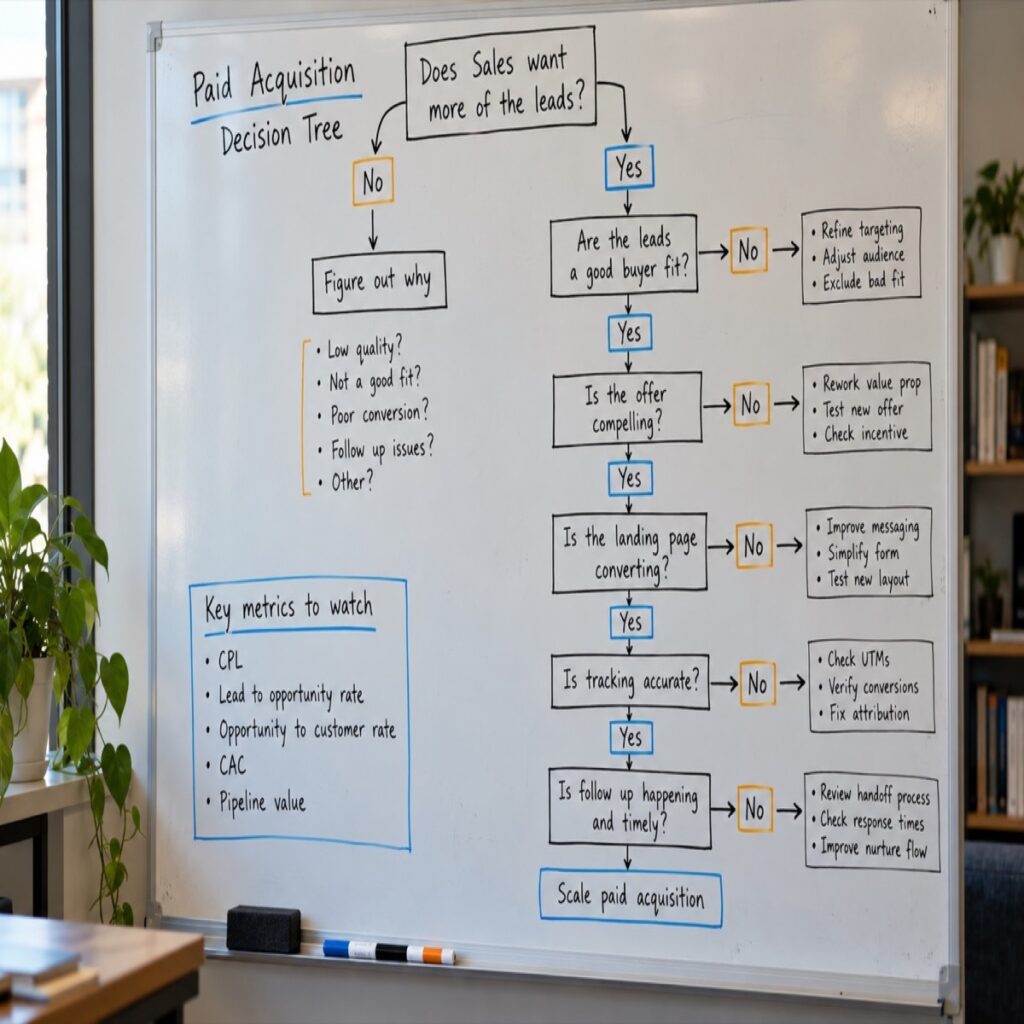
- Why does paid acquisition look efficient in the report but fail to build confidence?
- Why do teams keep adding activity without improving pipeline?
- What should a marketing leader inspect before increasing budget?
These subjects are more useful than broad advice about growth. They show how you think about the work.
Use real examples without exposing private information
A short story from a campaign review can hold attention better than a generic list of tips. Explain what you saw, what changed, and what you learned. Keep client information private, but retain enough detail to make the lesson useful.
Specific observations are what make an experienced marketer worth following.
Take a clear position
If every post is neutral, people may find it reasonable but forgettable. Say what you believe.
For example, B2B SaaS teams should stop celebrating lead volume when sales does not trust the leads. That position gives the reader something to consider and connects your profile to a commercial problem.
Choose a publishing rhythm you can maintain
You do not need to publish constantly. You do need to show up often enough for people to remember your point of view.
Pick a rhythm that fits your workload. Then keep writing about the problems you understand better than most people. The aim is not to appeal to every LinkedIn user. It is to become worth following for the people who care about your work.
How this connects to paid acquisition
A strong profile supports paid and organic demand because people often check the person behind a campaign. Your profile should reinforce the same commercial message as your landing pages and advertising.
If you manage B2B LinkedIn Ads or Google Ads, make sure the profile explains how you think about lead quality, sales acceptance, and qualified pipeline. See the B2B LinkedIn Ads consulting service for the related delivery approach.
Common questions
What should a B2B SaaS leader put in a LinkedIn headline?
State the audience you help and the commercial problem you work on. A clear promise is more useful than a list of titles or platforms.
How often should a marketing leader post?
Use a schedule you can maintain without lowering the quality of the point you are making. Consistency matters more than constant posting.
Next step
Review your headline, About section, and latest posts as if you were a buyer deciding whether to trust your perspective. Remove vague claims. Make the commercial point easier to understand.
For help connecting paid acquisition to qualified pipeline, book a B2B funnel review.
Book a B2B funnel review
Read the article, then book a short call to discuss where paid acquisition is losing qualified pipeline.